ASSYST HEART – The Project of My Heart
Every now and then I stop and ask myself a simple question:
Why am I doing this?
Not why I became a psychologist. Not why I teach EMDR. But why, over the last several years, I have devoted so much of my professional life to emergency response.
The answer always comes back to one thing.
People deserve timely psychological support after disaster - not months later, but when it matters most.
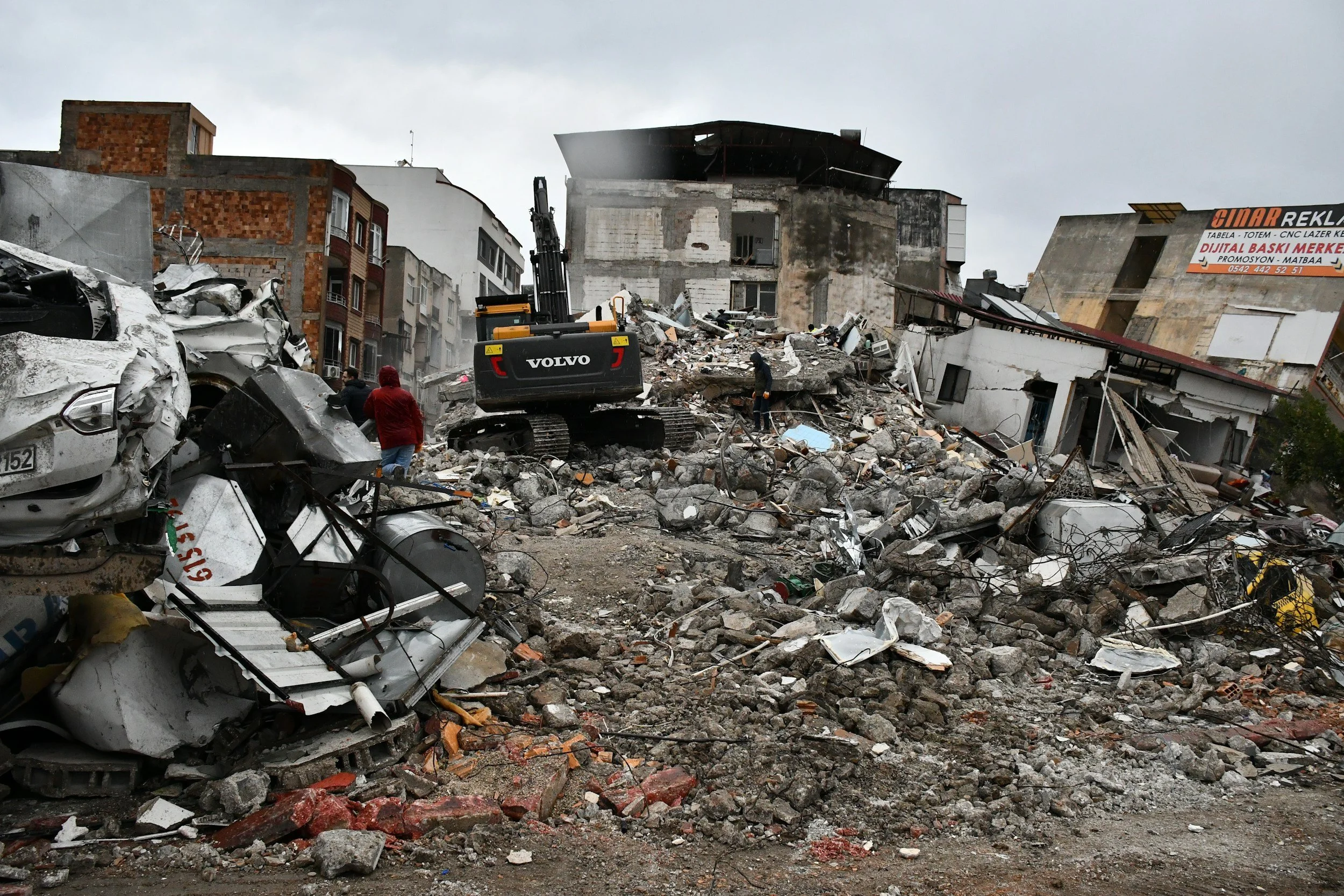
The first half of 2026 has reminded me just how unpredictable our world has become. Communities across Australasia have continued to experience natural disasters, accidents and sudden tragedies that leave thousands of people trying to make sense of overwhelming events.
This year alone, I have had the privilege of contributing to responses following the tragic Bondi Junction attack in Sydney, supporting New Zealand clinicians responding to severe weather events, working alongside practitioners helping bereaved families and first responders, and continuing conversations with emergency management organisations across Aotearoa New Zealand and the South Pacific.
These experiences have reinforced something I have believed for a long time.
We are incredibly good at saving lives.
We are becoming increasingly good at rebuilding infrastructure.
But there remains a significant gap in what happens psychologically during the days and weeks immediately after a community trauma.
Not everyone exposed to disaster needs specialist trauma therapy.
Equally, psychological first aid, while invaluable, is not designed to reduce traumatic stress symptoms or actively stabilise the nervous system.
There is an important space between these two levels of care.
That missing bridge is where ASSYST HEART belongs.
More than a training programme
ASSYST HEART stands for Acute Stress Syndrome Stabilisation – Humanitarian Emergency ASSYST Response Training.
Developed by Dr Ignacio (Nacho) Jarero and Lucina Artigas, international pioneers in EMDR group interventions and humanitarian trauma response, it is much more than another training course.
It is a humanitarian movement.
Everything about it is built around one simple principle:
No one should be denied early psychological support because of cost, geography or lack of specialist services.
Training is delivered voluntarily.
Interventions are provided free to affected communities.
Clinicians give their time because they believe that reducing suffering early benefits entire communities.
Today, more than 12,000 practitioners have been trained internationally, with interventions delivered in over 60 countries and protocols translated into more than 24 languages.
That scale speaks for itself.
Why this matters for New Zealand and the South Pacific
Living in Aotearoa New Zealand means accepting that disasters are not hypothetical.
Floods.
Cyclones.
Earthquakes.
Volcanic activity.
Community violence.
Industrial accidents.
Pandemics.
The South Pacific faces many of these same challenges while often working with smaller health workforces and fewer specialist mental health resources.
This makes scalable, evidence-informed early intervention more important than ever.
The World Health Organization has long advocated for layered systems of mental health and psychosocial support, where communities receive different levels of intervention according to need and available resources.
ASSYST HEART fits naturally within that model.
It offers a practical way of supporting people who are distressed after disaster before symptoms become entrenched, while allowing those requiring specialist care to be identified and referred appropriately.
It is not about replacing psychologists.
It is about making specialist services more effective by ensuring they are not the only option available.
Building local capacity
One of the greatest privileges of my work has been helping establish ASSYST HEART capability across Aotearoa, New Zealand.
Today we have trained clinicians spread across ten regions, including Great Barrier Island, creating the beginnings of a network that can respond quickly when communities need support.
What inspires me most is not the protocols.
It is the people.
Every practitioner has volunteered their time.
Everyone has contributed because they believe communities deserve better access to psychological support.
The generosity, professionalism and commitment of these clinicians continually reminds me why I love this work.
Changing systems takes patience
Introducing new ideas into established emergency systems is never easy.
Research evolves.
Practice changes.
Old assumptions are challenged.
We now know that some interventions once considered standard practice, such as routine psychological debriefing after disasters, are no longer supported by the evidence.
That does not mean the people delivering those services have failed.
It means we have learned more, and with new knowledge comes an opportunity to improve.
Real progress happens when emergency services, health professionals, community organisations, iwi, government agencies and humanitarian groups work together to build responses that are compassionate, practical and evidence-informed.
That is the future I hope to contribute to.
My heart project
People often ask why I continue to volunteer so much of my time to ASSYST HEART.
The answer is simple.
Because I believe every community deserves access to early, effective psychological support after disaster.
Whether that community is in my birthplace of Bulgaria, my adopted home of Aotearoa New Zealand, or anywhere across the South Pacific, the goal remains the same.
Helping people regain stability.
Helping communities reconnect.
Helping recovery begin earlier.
ASSYST HEART has become far more than a project for me.
It is the work that most closely reflects why I became a psychologist in the first place.
If you are involved in emergency management, health leadership, community resilience, humanitarian response, or disaster planning in New Zealand or the South Pacific, I would welcome the opportunity to start a conversation.
Because building resilient communities is not the responsibility of one profession.
It is something we achieve together.